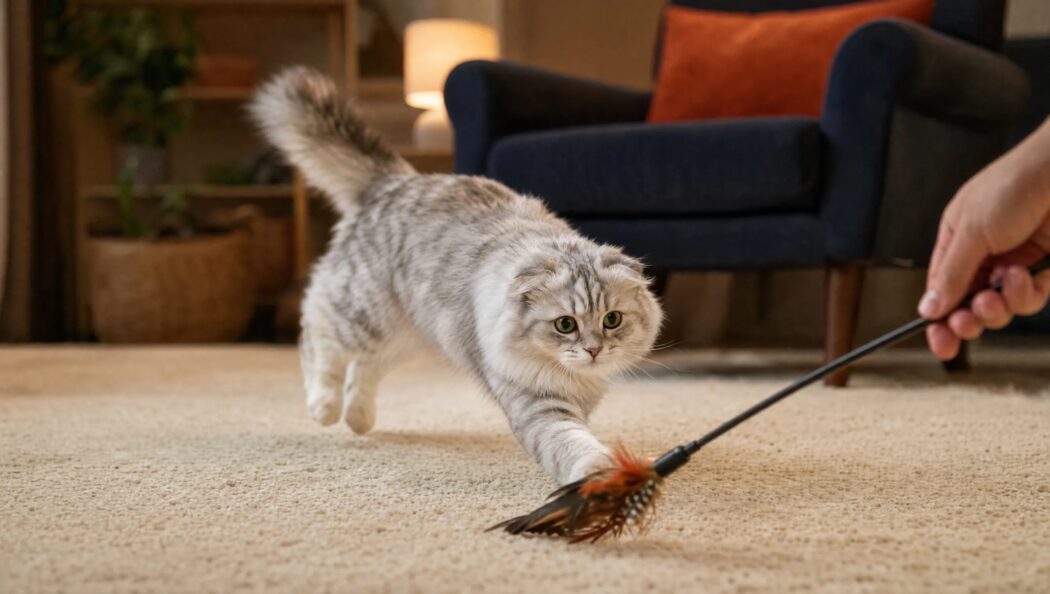
Evenings in our house follow a familiar pattern. Dinner is done, the dishes are drying, and a pair of bright eyes is watching from the hallway, waiting for something to happen. For indoor cats, we are often that something.
A simple indoor cat play routine can give your cat a safe way to stalk, chase, pounce and catch. It does not need to be elaborate, and it certainly does not need to last exactly 15 minutes. Think of 15 minutes as a flexible window. Some cats will enjoy most of it, while others prefer several much shorter bursts.
Why a short evening routine can help
Play matters because it gives cats an outlet for natural hunting behaviours. Cats Protection recommends regular play, especially for indoor cats, and notes that very short games of one or two minutes are perfectly fine.
That is important to remember. A 15-minute routine is not a target your cat has to complete. If your cat loses interest after four or five minutes, stop there. If they prefer three short bursts spread across the evening, that works too.
Regular play may help with boredom and excess energy, but it is not a magic switch for evening zoomies or night-time waking. Cats are individuals, and sleep, routine, age, health and temperament all influence their behaviour.
A flexible 15-minute play routine
You only need a wand-style toy, a small toy your cat can grab or kick, and enough clear floor space to move safely.
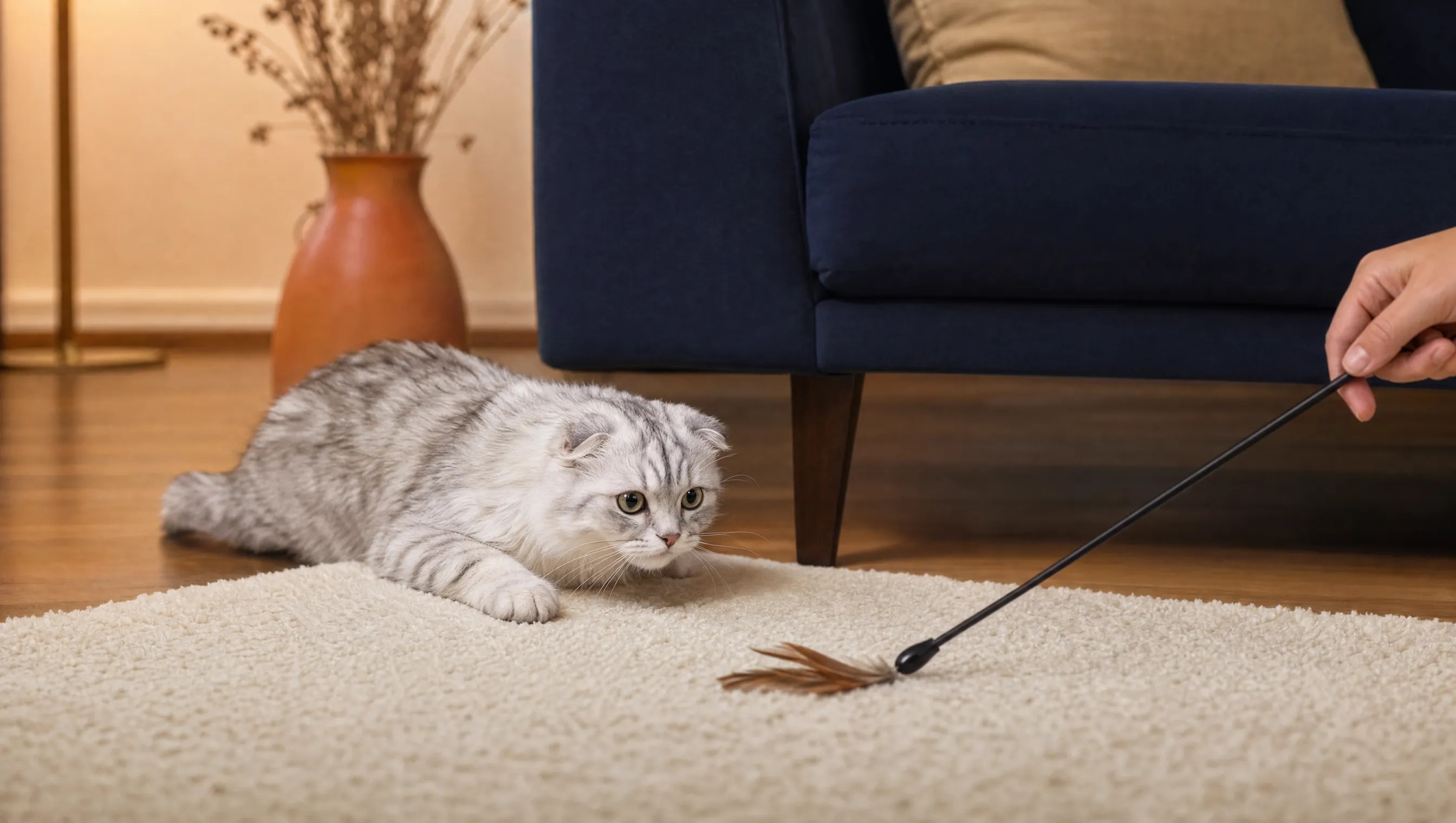
Warm-up: around 2 minutes. Start slowly. Move the toy along the floor, around a chair leg or briefly out of sight. Small movements can encourage your cat to watch, crouch and stalk before they chase.
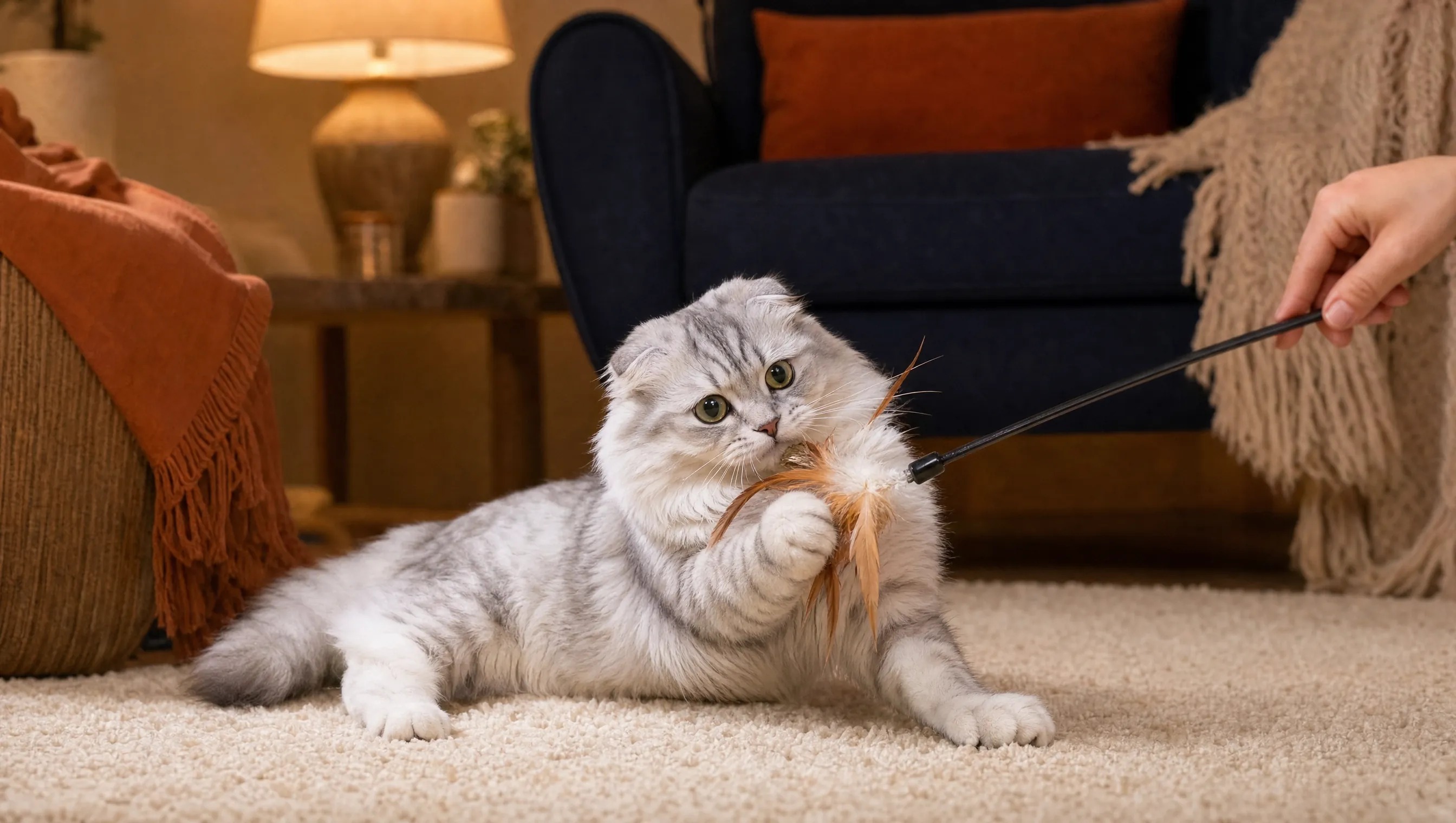
The hunt: around 6 to 8 minutes. Move the toy in short bursts, with pauses in between. Try taking it across or away from your cat rather than repeatedly pushing it towards them. Let your cat catch the toy regularly. Cats Protection recommends allowing cats to catch the toy periodically, rather than making every chase impossible to win.
Wind-down: around 3 minutes. Gradually slow the movement and make the pauses longer. Give your cat an easy final catch. If they have already lost interest, there is no need to continue simply to reach the 15-minute mark.
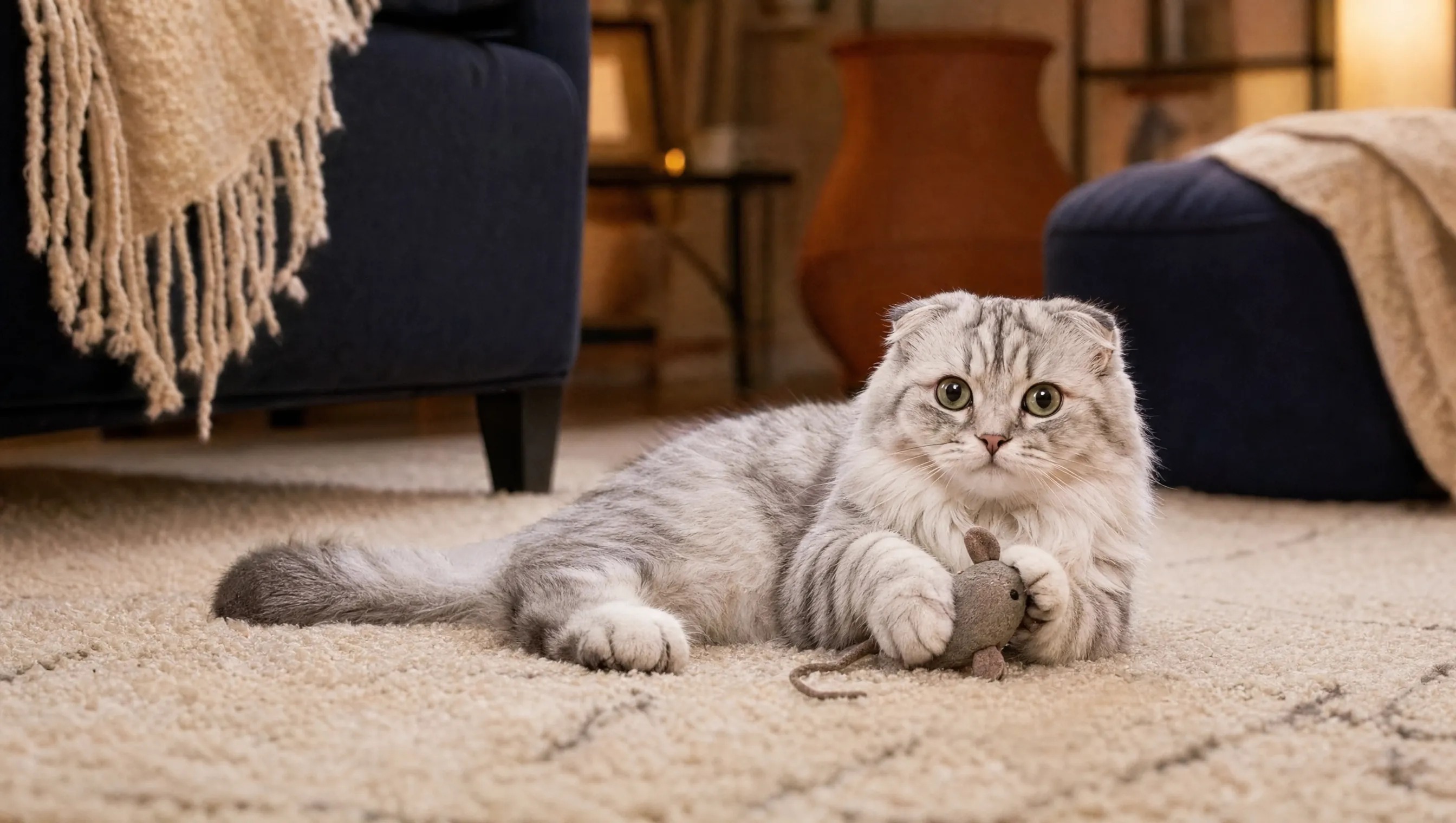
Settle: 1 to 2 minutes. Let your cat hold the toy briefly, or swap to a safe kicker toy. If it fits their normal feeding routine, you can follow play with a small portion of their usual evening food. Avoid adding unnecessary treats simply because playtime has ended.
A safety note: wand and string toys should only be used under supervision and put away when the session ends. String can cause serious problems if swallowed, and cats can become tangled in toys left unattended. International Cat Care has further guidance on safe, interactive play. Safe independent toys that cannot be easily shredded or swallowed can be left available for solo play.
How to tell when your cat has had enough
Every cat has a different point at which play stops being fun. Walking away, hiding, repeatedly disengaging from the toy, flattened ears, strong tail lashing or irritated swatting can all be signs that it is time to stop.
Simply lying down and watching does not always mean the game is over. Watching and waiting can be part of stalking behaviour. Look at your cat’s overall body language and whether they still seem interested in rejoining the game.
Open-mouth breathing or panting is different. Stop play immediately and keep your cat calm. PDSA advises contacting your vet straight away if your cat is panting, struggling to breathe or breathing with an open mouth. Do not simply wait for it to pass.
Adapt the routine to your cat
Kittens and young cats. Younger cats often enjoy frequent short bursts of play throughout the day. Keep hands and feet out of the game and use toys instead, so chasing and pouncing are directed towards appropriate targets.
Older cats. Many senior cats still enjoy play, but the pace may need to be gentler. Keep toys low to the ground, reduce jumping and shorten sessions. If your cat seems stiff, reluctant to move or suddenly less interested in play, speak to your vet. Arthritis is common in older cats and can make movement uncomfortable.
Shy or anxious cats. Give them space. A longer wand lets you keep some distance, while a nearby box, chair or hiding place can help a nervous cat feel secure. Let them choose whether to join in.
Less active or overweight cats. Start small. One or two minutes of gentle movement may be enough at first. Build up gradually according to your cat’s interest and mobility. If you are concerned about your cat’s weight, ask your vet for advice rather than suddenly increasing exercise.
Multi-cat homes. One confident cat can easily take over. Separate play sessions often work well, or two people can play with different cats at the same time. If play starts turning into tension or conflict, stop the session and give the cats space.
Making it work on busy weeknights
A useful routine is one you can actually repeat. Keep it simple:
- Choose a familiar cue, such as after dinner or before the evening meal.
- Keep interactive toys somewhere convenient for you but out of your cat’s reach.
- Rotate toys every few days so familiar favourites feel fresh again.
- Share playtime between members of the household if that suits your cat.
- Do not worry if some evenings are shorter than others.
Only have five minutes? That still counts. Try a short warm-up, two or three minutes of chasing and catching, then a slow final catch. Cats Protection specifically notes that short play sessions can work well, so consistency matters more than reaching an arbitrary number on the clock.
When to speak to your vet
Playtime is also a useful opportunity to notice changes in your cat. Contact your vet if you notice:
- open-mouth breathing, panting or difficulty breathing
- new limping, stiffness or reluctance to jump
- a sudden loss of interest in play
- an unexplained change in energy levels
- unexplained weight gain or weight loss
A sudden change in behaviour can sometimes have a medical cause, so it is worth asking for professional advice rather than assuming your cat is simply getting older or becoming less playful.
Fifteen minutes is only a framework. The best play routine is the one that suits your cat, fits your household and leaves both of you wanting to do it again. Follow your cat’s lead, keep sessions safe, and enjoy the time together.
All photographs: The Casa Michi Family
For more practical advice on everyday wellbeing, visit our cat care guides.